Debunking Estate Planning Myths
From the thousands of questions I’ve heard from clients, there are numerous recurring misconceptions about Estate Planning that seem to continuously resurface:
Myth 1: If I have a Will, my assets will not need to go through Probate Court.
Many people think that setting forth their wishes in a formal Will avoids Probate Court. This is not correct. Wills guide the Court in the distribution of your assets, but Wills never avoid the Probate Court process. If you pass away with assets in your individual name (without any beneficiaries listed on them) and only have a Will, those assets must go through Probate Court.
Myth 2: If I tell my loved ones what I want done with my assets, that will be sufficient.
Nothing could be further from the truth. Telling your relatives how you want your assets distributed will not avoid probate court, and will not be legally binding or effective.
Myth 3: A Trust is the only way to avoid Probate Court.
While a Trust may be the best way to avoid Probate Court, in certain limited circumstances, there may be other options to avoid your assets going though Probate Court, including putting POD and TOD designations on each asset. This should be discussed in detail with your attorney.
Myth 4: Once my Trust is signed, all of my assets will automatically avoid Probate Court.
There are always two steps to creating a Trust. Step 1 is drafting and signing that Trust, and step 2 is funding that Trust. A trust only governs assets that are titled in the name of your Trust, so the attorney will direct you what assets need to be retitled into the name of your Trust and which ones should name the Trust as a beneficiary. If you create a Trust, but fail to properly fund your Trust as directed by your attorney, all of your assets will still go through Probate Court.
Myth 5: Estate Planning is just about planning for my death.
While a Trust and Will do set forth how you want your assets distributed after your death, they also deal with the management of those assets during your lifetime. Trusts provide for someone to take over the management of your assets, pay your bills and provide for your care should you become incapacitated and unable to handle your own affairs due to an accident or illness. A Durable Power of Attorney is a highly recommended Estate Planning document that allows you to appoint an agent (usually a close relative) to make decisions for you and handle your day-to-day matters should you become incapacitated. Likewise a Durable Power of Attorney for Health Care and Health Care Directive appoints someone to make medical decisions for you should you be unable to make them on your own.
Myth 6: I’m too young to need Estate Planning.
While the odds are that someone isn’t going to pass away in their 20s, attorneys still see that happen every day. No one knows when they’re going to meet their Maker. Even if someone doesn’t pass away early in life, automobile accidents often happen that require the need for Powers of Attorney. Our office often has parents bring their children in to do their Estate Planning documents right when they turn 18 (and legally become adults).
Myth 7: I don’t have enough assets to do Estate Planning.
Estate Planning is for EVERYONE, no matter your net worth. Even if your only asset is a car and a small checking account, an attorney will provide you with advice on how to handle those assets to hopefully avoid the necessity of your relatives taking those assets through probate court. In addition, Powers of Attorney will also be recommended so that a close relative will be able to make decisions for you should you become incapacitated.
Myth 8: I’ll just put my child’s name on my bank account to help out if I become incapacitated, and as a result, I won’t need any Estate Planning documents.
That’s usually a big mistake. Most people don’t realize that by putting their son or daughter’s name on their account, they’ve made a gift to that child, and their child is now a co-owner of that account. If that child gets divorced, their spouse may very well try to get at those assets. If that child is ever sued for a debt or an automobile accident or other negligent act, that account will be viewed as co-owned by the child, and could be completely seized to satisfy any Judgment that is entered. If that child ever files bankruptcy, that account will be part of the bankruptcy estate. Finally, co-ownership does NOT ensure that account will go to the co-owner after death. It may very well still end up going through the probate court process.
Myth 9: I will have to pay gift taxes if I give someone more than $18,000 in a year.
While you will have to file a gift tax return, you don’t pay gift taxes on that gift. It simply reduces your lifetime gift and estate tax exclusion (currently $13.61 Million for an individual). You don’t have to pay taxes until you use up that entire amount. Right now, the limit is so high, that it doesn’t affect most people, but that amount is set to go down to $5.49 Million on January 1, 2026 unless the law is changed.
Myth 10: I can use one of the online tools to draft my own Trust, Will and Powers of Attorney.
This is simply a disaster waiting to happen. I can’t tell you how many DIY documents I’ve looked at that are completely invalid or that distribute assets in a completely different way than the drafter intended. The problem is often that the first time the problem is discovered is after the person has died, and there’s no way to correct the error – they’re either left with invalid documents or a distribution scheme that is very different from what they intended. There’s no replacement for having an attorney professionally draft and customize your documents.
Myth 11: Once I draft my Estate Planning documents, I can forget about them.
Our office advises clients to review their Estate Planning documents every 3-5 years or upon any life change. Certainly marriages, births and deaths may require revisions to your documents. A change in relationships with the people you appointed often prompt a change in the documents. Often peoples perspective and priorities change and its common to revise their asset distribution scheme as time passes. E.g., rearranging the percentages given to the beneficiaries, adding or deleting beneficiaries, or putting contingencies on the ability to receive an asset, etc.
Myth 12: My Will and Trust control all of my assets and how they’re distributed.
POD, TOD and beneficiary designations supersede your Will and Trust and go to the person that’s designated on that particular asset regardless of what your Will or Trust says. In addition, co-ownership may have a significant effect on how that particular co-owned asset is distributed upon your passing. Those are all topics that an attorney will provide detailed guidance on.
Interested in reading more about common estate planning myths? Read the follow-up blog article: Debunking Estate Planning Myths 2.0 (Continued).
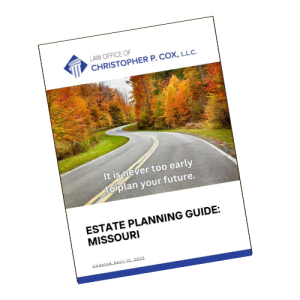
Free Estate Planning Guide
Download your FREE copy of our Estate Planning Guide. We are so confident you’ll find our resource helpful, we don’t require anything from you to get it.
Recent Posts